Business Name: BeeHive Homes of Hobbs
Address: 1928 W College Ln, Hobbs, NM 88242
Phone: (505) 591-7023
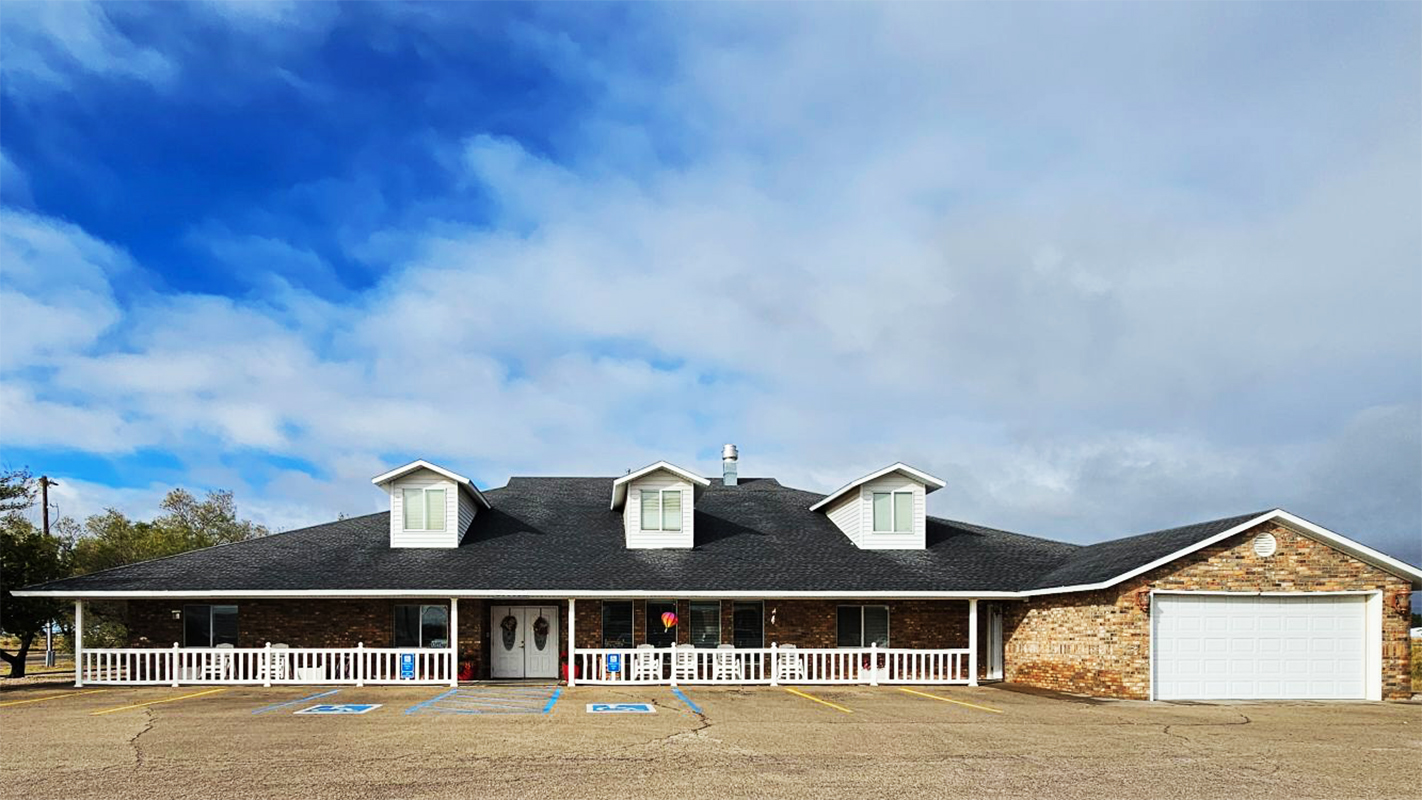
BeeHive Homes of Hobbs
Beehive Homes of Hobbs assisted living is ideal for those who value their independence but require help with some of the activities of daily living. Residents enjoy 24-hour support, private bedrooms with baths, medication monitoring, home-cooked meals, housekeeping and laundry services, social activities and outings, and daily physical and mental exercise opportunities. Beehive Homes memory care services accommodates the growing number of seniors affected by memory loss and dementia. Beehive Homes offers respite (short-term) care for your loved one should the need arise. Whether help is needed after a surgery or illness, for vacation coverage, or just a break from the routine, respite care provides you peace of mind for any length of stay.
1928 W College Ln, Hobbs, NM 88242
Business Hours
Monday thru Sunday: 9:00am to 5:00pm
TikTok: https://tiktok.com/@beehivehomeshobbs
YouTube: https://www.youtube.com/@WelcomeHomeBeeHiveHomes
Facebook: https://www.facebook.com/Beehivehomeshobbs
Instagram: https://www.instagram.com/beehivehomeshobbs
On a Tuesday afternoon recently, I watched a retired librarian called Maria lead a circle of locals through a brief poetry reading. She moved her finger along the lines slowly, then stopped briefly to ask what the last verse reminded them of. The group was blended. One male had advanced Alzheimer's and rarely spoke completely sentences. Another had vascular dementia with attention that roamed. Yet for twenty minutes, they shared palpable attention. A female who generally paced stood still to listen. The male with minimal speech smiled and tapped the rhythm of a rhyme he must have found out in grade school. The facilitator was not a volunteer who occurred to love books. She was a memory care expert who understood how to braid familiar topics, brief intervals, and sensory prompts into a session that satisfied human requirements beneath the memory loss.
That scene records the difference between a memory care program and a general assisted living regimen. Assisted living is developed to assist with everyday jobs - bathing, dressing, meals, medication suggestions - and to use social engagement. Memory care is developed to support a changing brain. It is not just a locked corridor or extra alarms. Done right, it is a system of environment, training, rhythm, and relationships that decreases distress and assists someone hold onto identity and purpose longer.
What assisted living succeeds, and where it reaches its limits
Assisted living fills a vital function for older adults who desire aid with daily life while keeping a procedure of independence. The very best neighborhoods use warm dining rooms, activities calendars, on-site nursing assistance, and quick response when somebody presses a call button. They are generalists by style, serving homeowners with arthritis, heart conditions, moderate lapse of memory, and the everyday obstacles that featured aging.
Cognitive modification makes complex that design. Residents living with dementia typically struggle with short-term memory, abstract thinking, and sequencing. A person might forget whether they took a tablet 5 minutes after the nurse leaves, struggle to follow a group bingo game due to the fact that the guidelines feel brand-new each time, or grow afraid in a long corridor with identical doors. As dementia advances, behavioral expressions like agitation, resistance to care, exit-seeking, or sundowning can emerge. In a basic assisted living unit, personnel are trained to be kind and efficient, but they may not have the depth of dementia-specific proficiency to expect triggers or adapt the environment.
I have walked into assisted living dining rooms at 6 pm to find a table of three where just one individual consumes gradually. The other 2 hold forks, then set them down, then look lost. 10 minutes later, as the space grows louder, one presses the plate away. The caretaker, juggling six tables, brings a milkshake as a fast calorie boost. It is a reasonable workaround, not a service. Memory care aims at the root, not only the symptoms.
What makes memory care different
Memory care programs fulfill individuals where they are, utilizing every lever possible - area, staffing, schedules, and specialized approaches - to minimize confusion and build minutes of success. The most credible distinction lies in 2 pillars: purpose-built environments and dementia-trained teams.
In a memory care home, sightlines are simple. Hallways end in a cue rather than a dead stop. Doors to storage or staff-only areas blend into the wall color so they do not welcome yanking. Kitchens are visible and safe, since the odor of toasted bread or onions in a pan can hint cravings more naturally than verbal triggers. Lighting is even and warm to reduce glare and deep shadows that can look like holes to a brain that is losing contrast sensitivity. There are shadow boxes outside bed rooms with individual images or little objects to assist someone discover their door by recognition more than by number. Outdoor spaces are enclosed yet inviting, with constant walking loops so a resident can move without encountering a locked barrier. These are not aesthetic choices, they are medical tools.
Teams in memory care receive training that goes far beyond the orientation module on dementia that the majority of caregivers see in assisted living. Great programs include hands-on practice in redirection, recognition, and non-verbal communication. Personnel learn to analyze habits as interaction - hunger, discomfort, boredom, fear - and to respond using hints that do not rely on memory or factor. They practice how to use options that are not overwhelming, how to approach from the front with a smile and a soft welcoming, how to pace a shower so it feels safe, and how to pivot when something is not working. They discover the risks and limitations of antipsychotics and sedatives, and the options that typically work better.
Clinical depth without turning into a hospital
Families often fret that a memory care system will feel medicalized. The best ones do not. Yet behind the soft lighting sits a tighter medical weave than many assisted living floors can preserve. Medication systems are adjusted to the threats and realities of dementia. For instance, homeowners who pocket tablets or forget they currently swallowed may receive medications squashed in applesauce with authorization, or arranged at times when attention is highest. Nurses track bowel patterns because irregularity fuels agitation. Hydration gets built into the flow of the day - fruit-infused water pitchers at eye level rather than a cup by the bed.
Falls are the danger all of us understand. Memory care utilizes unobtrusive cues and design to avoid them: contrasting colors at the edge of steps, clear strolling paths devoid of scatter carpets, chairs with arms to assist sit-to-stand, and regular gait checks by therapists after any modification in condition. For those with agitated nights, personnel observe and adapt rather than require a rigid sleep schedule. A brief, monitored walk at 2 am can prevent a 3 am look for the front door.
Medical oversight differs by state and operator, however well-run memory care programs often show lower rates of avoidable emergency room transfers compared to similar locals in general assisted living, especially after the first 60 to 90 days when individualized plans settle in. That is not magic, it is distance and alertness. A medication negative effects is noticed quicker. A urinary system infection appears as subtle changes in engagement or gait, and staff flag it before delirium escalates.
Behavioral health knowledge that avoids crises
Behavioral and psychological signs of dementia - frequently called BPSD - are not wrongdoing. They are the brain's response to internal discomfort or environmental overload. A person who sets out throughout a bath might be cold, embarrassed, unable to translate water on skin, or preventing a stranger's approach viewed as a danger. Memory care staff are trained to decrease, tell actions, provide a towel for modesty, and use the individual's name and life story as anchors.
Non-pharmacologic techniques precede. A resident pacing near the exit might respond to a purposeful job, like providing mail to staff stations. A male who rummages in the evening might be relieved by a basket of safe items to sort: belts, headscarfs, basic tools without sharp edges. If a woman requires her late hubby, personnel may sit and inquire about their big day instead of fix the truth. The brain that can not hold new data might still hold music, rhythms, and procedural memories for knitting or basic dance actions. Tapping those reservoirs minimizes distress more reliably than a sedative.
Medication still has a place, thoroughly. Antipsychotics can relax extreme hostility or psychosis, but they carry real risks, consisting of stroke and increased mortality in older adults with dementia. In my experience, when a memory care program is tuned well, households typically see overall psychotropic usage decrease over several months, not by edict but because the drivers of distress are resolved. That is the quiet success rarely captured on a brochure.
Safety that protects dignity
Security in memory care is not just about alarms. It has to do with developing away the most common triggers for risky habits. Exit-seeking prospers on monotony and hints. If the exit door is next to a dynamic sitting area, the pull to explore rises. If the door looks like a door, the hand goes to the deal with. Smart design moves entries out of natural sightlines and makes staff spaces visually unobtrusive. Hand rails are constant and plainly noticeable. Courtyards sit at the heart of the system so residents see daylight and can move toward it. If someone genuinely tries to leave, personnel are close, not racing from the other end of a big building.
Restraints are not a service. Seat belts that can not be eliminated, deep chairs that trap, or bed rails that prevent getting up can cause injury and fear. Better to design safe motion paths and to keep hands hectic with picked tasks than to immobilize. Families frequently need reassurance on this point. The urge to avoid every fall by holding somebody still is human. In a memory care home that works, threat is managed, not removed, and dignity is preserved.
Families are part of the care plan
The initially weeks in memory care are a change for everybody. The richest programs develop an in-depth life story with the family: labels, food likes and dislikes, early morning or night person, past functions, happy moments, worries, words that spark a smile, topics to avoid. Those truths do not sit in a binder. Personnel utilize them. I have actually seen a hesitant bather unwind when the caretaker highlights lavender soap since that is what her child utilizes, or a previous mechanic engage when handed a set of big nuts and bolts to match rather of a deck of cards he never liked.
Communication is ongoing and two-way. Weekly updates by text or app are common, however the most valuable chats are often quick face-to-face shares at pick-up after a visit, or a call when a brand-new behavior appears. Households bring insight, and great groups listen: Dad never wore slippers, so he keeps taking them off; attempt sneakers. Mom hates eggs; offer oatmeal once again. Little modifications add up.
The money concern and the worth behind it
Memory care generally costs more than basic assisted living. Throughout the United States, private-pay rates in 2026 often range from the mid $5,000 s to above $9,000 per month depending on region, with care levels raising the rate as requirements grow. In some markets, stand-alone memory care homes charge a flat extensive cost, while others use tiered prices or point systems that adjust with assistance needs. Medicaid waivers cover memory care in particular states, however availability and waitlists differ widely.
Families naturally ask whether the premium is justified. From my seat, the calculus includes avoided expenses, not just regular monthly lease. In general assisted living, repeated 911 require agitation or falls can acquire medical facility co-pays, ambulance costs, and the concealed toll of deconditioning after each hospitalization. Home care to supplement an assisted living setting that can not securely handle habits can press overall outlay to comparable levels as memory care. More importantly, quality of life frequently enhances when the environment fits. Nights can be calmer. Meals are eaten with less coaxing. Partners and adult kids can visit as partners, not crisis managers. Those results are difficult to put on a line item but they matter.
Edge cases that check a program's mettle
Not every memory care home is the ideal suitable for every person with dementia. Part of being a professional is naming limits.
Early-onset dementia frequently brings different profiles: more powerful bodies with high activity needs, atypical language or visual-spatial deficits, and children still at home. A memory care home with mostly locals in their 80s may not suit a 62-year-old former runner who wants to stroll for hours. Look for programs with versatile schedules, outdoor access, and staff who take pleasure in high-energy engagement.
Complex medical co-morbidities make complex placement: sophisticated Parkinson's with dementia, oxygen dependence, fragile diabetes. Strong nursing assistance and prepared access to therapists matter here. So do doctor relationships that permit quick pivots without sending somebody to the ER for every bump.
Couples present another challenge. Some communities permit a spouse without cognitive problems to cope with their partner in memory care, others do not. The psychological advantages can be enormous, however the well spouse may fight with the social environment. Hybrid designs, where the partner lives in assisted living and spends much of the day in memory care shows with their partner, often hit the sweet spot.
Cultural and language needs make or break comfort. A memory care system that can use foods, holidays, language, and music familiar to the resident will feel like home. Ask straight about staffing patterns and language capability on each shift, not simply the sales tour.
When to think about moving from assisted living to memory care
Timing the shift is as much art as science. A few patterns tend to indicate readiness: roaming beyond safe locations, regular elopement efforts, increasing distress throughout bathing or toileting that withstands training, night-time wakefulness that interrupts others, weight reduction due to the fact that meals are too chaotic, or repeated journeys to the hospital for behavioral reasons. When staff in assisted living begin to say, with issue instead of frustration, that they are reaching their limits, listen.
Families often wait, hoping a new medication or more individually attention will steady things. In some cases it does. More often, the root is ecological. One resident I dealt with intensified his exit-seeking at 4 pm every day in assisted living. The personnel tried including a sitter for those hours, which assisted up until the sitter required to leave one day and the resident made it out the door. In memory care, he signed up with a standing 3:30 pm walking club with personnel through the garden, then helped set out napkins for an early supper. The exit-seeking faded, not due to the fact that he forgot the door however because his body and brain got what they needed.
How to examine a memory care home during a tour
- Watch a care interaction up close. Try to find calm tone, eye contact at the resident's level, and staff who utilize the person's name and await a response. Eat a meal in the dining room. Notification noise level, pacing, whether plates are adapted for presence, and how personnel hint eating. Ask about staff training specifics. Hours at hire, refreshers, who teaches, and how they evaluate skills beyond a quiz. Review how habits are evaluated and tracked. What is the process before including or increasing psychotropic medications, and how are non-drug interventions documented? Look at schedules over a week. Exist different small-group programs, evening routines, and significant roles, not just generic activities?
What an excellent day looks like
It assists to envision life beyond functions on a pamphlet. In one memory care home I respect, mornings begin silently. Citizens wake by themselves timeline between 6:30 and 9 am. The odor of cinnamon rolls wanders from an open kitchen. A caretaker knocks gently, presents herself, and provides two t-shirts to select from. In the hallway, a short screen showcases photos of area landmarks from the 1960s; individuals stop briefly to point and name.
After breakfast, little groups form based on interest and requirement. One group tends raised garden beds. Another meets near a sunny window for chair movement and rhythm video games led by a team member with a bongo. Medication time is woven between, provided to the table with a casual, familiar exchange. No one lines up.
Around twelve noon, the lighting dims slightly to smooth the transition to rest. Some nap, others watch a classic comedy with captions. At 2 pm, a music therapist arrives with a guitar. Citizens collect in a circle, and for thirty minutes voices increase in snippets of remembered tunes. A lady who hardly ever speaks hums harmony to "You Are My Sunlight." Later, a volunteer uses hand massages. Staff note who appears restless and prepare a garden loop before afternoon shadows lengthen.
Evenings go for convenience. Supper menus are basic and familiar. Dessert is not kept if a resident consumed lightly at the main course - calories matter more than stringent meal order. At 6:30 pm, a caregiver leads a "goodnight room" routine: tones down together, soft light on, a preferred quilt smoothed. For a man whose military service still forms his nights, staff location his hat on the dresser in sight; he relaxes when he sees it. Late-night restlessness, if it comes, fulfills a seat near a shadowed window and a peaceful speak about the moon and the garden, rather than a battle for sleep.

When assisted living still fits, and hybrid options
Not everyone with a dementia diagnosis requires memory care right away. In early phases, numerous thrive in assisted living with assisted living supports: medication setup, calendar reminders, escorted activities, and mild ecological tweaks like large-print signs and contrasting dishware. If the person enjoys the social mix and can follow the circulation with hints, it can be the ideal option. Some communities run specialized day programs or provide a memory care day track while the person still resides in assisted living. That hybrid gives structured engagement without a full move.
The inflection point is less about a diagnosis and more about the pattern of success. If weekly brings workarounds, if staff write more incident reports than development notes, if the individual seems lost more than illuminated, it might be time to move.
The peaceful foundation: staffing stability and support
You can tell a lot about a memory care home by the length of time the caretakers have actually been there. Dementia care work is relational and requiring. Burnout types turnover, and turnover tears continuity. Search for signs of a healthy staff culture: constant tasks so the same aides look after the exact same residents, paid time for training, manageable resident-to-caregiver ratios, support from nurses who model hands-on care, and leaders who pitch in at mealtimes. Ask a caretaker during a tour what keeps them there. If they say they are heard and have time to do things right, take note.

Ratios differ widely. Throughout the day, I tend to see one caretaker for every single 5 to 8 homeowners in well-resourced programs, with greater staffing throughout peak care times. At night the ratio might go to one to 8 or one to ten, with a float to help throughout early morning routines. Greater acuity or bigger footprints require more. Ratios on paper matter less than how they play out. View who responds to call lights, who notices the quiet resident in the corner, and whether mealtimes look rushed.
Technology as an assistance, not a substitute
Family members typically inquire about tracking gadgets and electronic cameras. Innovation can help, thoroughly utilized. Roam management systems that quietly alert personnel when a resident techniques an exit decrease elopement without alarms that shock everyone. Motion sensors in spaces can hint staff to examine someone who gets up often during the night. Electronic care records help track patterns - when a habits occurs, what preceded it, which interventions helped. Video monitoring in common areas can be warranted for safety, with clear personal privacy policies. None of these tools replace observation and connection. They totally free personnel from some uncertainty so they can invest more time with people.
Regulation and what quality looks like
Rules differ by state. Some license memory care as an unique category with particular training and environmental requirements. Others fold it under assisted living with add-ons. Accreditation bodies and expert associations release finest practices, yet there is no single seal that guarantees quality. That is why observation and pointed concerns matter.
A few indications offer me confidence. Care prepares that consist of particular, resident-centered methods, not generic expressions. Routine review meetings that involve families. A falls committee that takes a look at origin, not blame. A behavior evaluation process that needs trying non-pharmacologic alternatives and recording outcomes before escalating medications. Low usage of physical restraints. Visible engagement at various times of day, not just when marketing is on the floor. Clean restrooms without sticking around smells. Smiles that reach the eyes, on homeowners and staff.
A much better frame for success
Families typically ask me how to measure whether memory care is working. Do not look just at the number of minutes your loved one spends in activities or whether they keep in mind a staff member's name. Procedure softer, truer outcomes. Less worried telephone call during the night. A plate that is regularly half-empty than untouched. A new friend who sits beside your dad most afternoons, even if they seldom exchange words. A laugh you have not heard in months. Weeks without an ambulance ride. These are the markers I trust.
Maria, our retired curator, will not recover her detailed memory. The poems she reads will be new once again tomorrow. Yet in a memory care home that fits, she does not need to perform. She is met, seen, and provided methods to be herself within brand-new limits. Assisted living does many things well, and for many individuals it remains the ideal step. When dementia complicates the image, a real memory care program is not simply more care. It is various care, tuned to the brain and the individual, so that a day can consist of not just safety and hygiene but meaning. That is the peaceful elevation that matters.
BeeHive Homes of Hobbs provides assisted living care
BeeHive Homes of Hobbs provides memory care services
BeeHive Homes of Hobbs provides respite care services
BeeHive Homes of Hobbs supports assistance with bathing and grooming
BeeHive Homes of Hobbs offers private bedrooms with private bathrooms
BeeHive Homes of Hobbs provides medication monitoring and documentation
BeeHive Homes of Hobbs serves dietitian-approved meals
BeeHive Homes of Hobbs provides housekeeping services
BeeHive Homes of Hobbs provides laundry services
BeeHive Homes of Hobbs offers community dining and social engagement activities
BeeHive Homes of Hobbs features life enrichment activities
BeeHive Homes of Hobbs supports personal care assistance during meals and daily routines
BeeHive Homes of Hobbs promotes frequent physical and mental exercise opportunities
BeeHive Homes of Hobbs provides a home-like residential environment
BeeHive Homes of Hobbs creates customized care plans as residents’ needs change
BeeHive Homes of Hobbs assesses individual resident care needs
BeeHive Homes of Hobbs accepts private pay and long-term care insurance
BeeHive Homes of Hobbs assists qualified veterans with Aid and Attendance benefits
BeeHive Homes of Hobbs encourages meaningful resident-to-staff relationships
BeeHive Homes of Hobbs delivers compassionate, attentive senior care focused on dignity and comfort
BeeHive Homes of Hobbs has a phone number of (505) 591-7023
BeeHive Homes of Hobbs has an address of 1928 W College Ln, Hobbs, NM 88242
BeeHive Homes of Hobbs has a website https://beehivehomes.com/locations/hobbs/
BeeHive Homes of Hobbs has Google Maps listing https://maps.app.goo.gl/NA3yB3pLGCEJrwAC7
BeeHive Homes of Hobbs has TikTok page https://tiktok.com/@beehivehomeshobbs
BeeHive Homes of Hobbs has an YouTube page https://www.youtube.com/@WelcomeHomeBeeHiveHomes
BeeHive Homes of Hobbs has Facebook page https://www.facebook.com/Beehivehomeshobbs
BeeHive Homes of Hobbs has Instagram page https://www.instagram.com/beehivehomeshobbs
BeeHive Homes of Hobbs won Top Assisted Living Homes 2025
BeeHive Homes of Hobbs earned Best Customer Service Award 2024
BeeHive Homes of Hobbs placed 1st for Senior Living Communities 2025
People Also Ask about BeeHive Homes of Hobbs
What is BeeHive Homes of Hobbs Living monthly room rate?
The rate depends on the level of care that is needed. We do a pre-admission evaluation for each resident to determine the level of care needed. The monthly rate is based on this evaluation. There are no hidden costs or fees
Can residents stay in BeeHive Homes of Hobbs until the end of their life?
Usually yes. There are exceptions, such as when there are safety issues with the resident, or they need 24 hour skilled nursing services
Do we have a nurse on staff?
Yes. Our administrator at the Village is a registered nurse and on-premise 40 hours/week. In addition, we have an on-call nurse for any after-hours needs
What are BeeHive Homes of Hobbs's visiting hours?
Visiting hours are adjusted to accommodate the families and the resident’s needs… just not too early or too late
Do we have couple’s rooms available?
Yes, each home has rooms designed to accommodate couples. Please ask about the availability of these rooms
Where is BeeHive Homes of Hobbs located?
BeeHive Homes of Hobbs is conveniently located at 1928 W College Ln, Hobbs, NM 88242. You can easily find directions on Google Maps or call at (505) 591-7023 Monday through Sunday 9:00am to 5:00pm
How can I contact BeeHive Homes of Hobbs?
You can contact BeeHive Homes of Hobbs by phone at: (505) 591-7023, visit their website at https://beehivehomes.com/locations/hobbs/ or connect on social media via TikTok Facebook or YouTube
Green Meadow Park offers walking paths and peaceful water views where residents in assisted living, memory care, senior care, elderly care, and respite care can enjoy gentle outdoor relaxation.